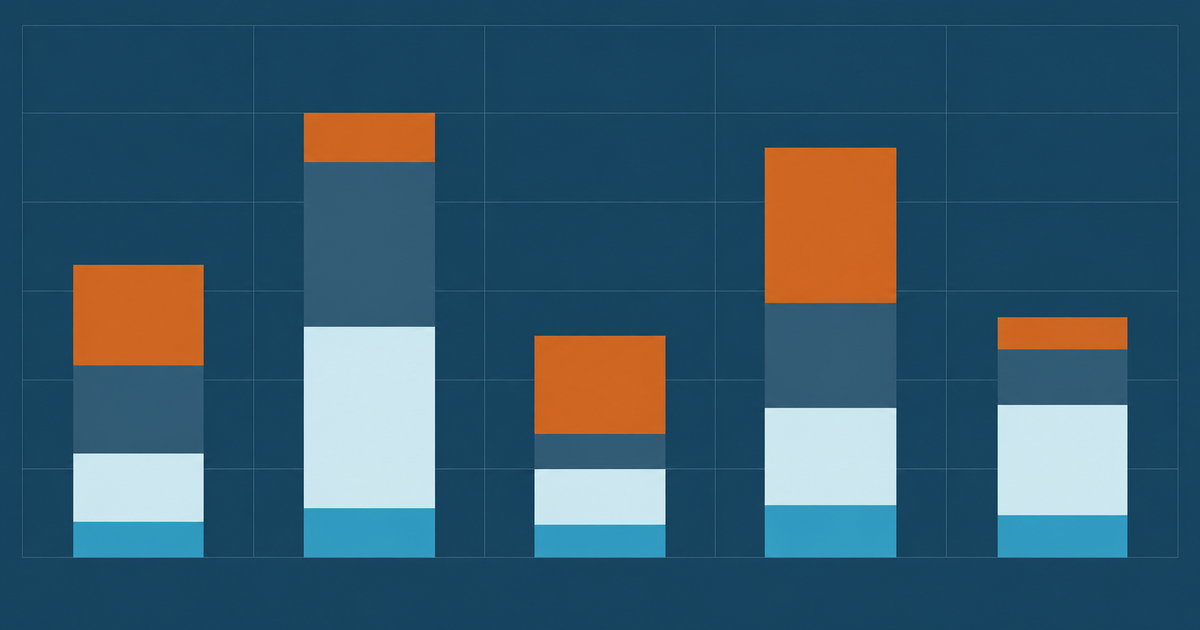
Every quote you receive will be for the licence. Every project that goes wrong goes wrong on one of the other four lines.
Short answer: budget the licence at roughly a third of year one and less than half of year two. The lines that get missed are data cleanup before go-live, integration work on both sides, and the ongoing human effort of keeping records complete, which no platform removes and several make more visible. If a business case does not name those three, it is not a business case.
The five lines
Licence or subscription. Priced per user, per SKU, per asset, per gigabyte, or per some blend. This is the negotiable one and it is the one everyone negotiates, usually at the expense of attention to the others.
Implementation. Configuration, schema build, channel mappings, and the integration work on both ends. Frequently sold as a fixed-price package that covers the first two and not the third. Ask explicitly who is building the connection to your storefront, because “we have an integration” often means “there is an API”.
Data preparation. Cleaning, deduplicating and completing what you already have, before it can be loaded. This is the line most often estimated at zero and it is almost never zero. If your current data were clean you would probably not be buying anything.
Ongoing content work. Someone still has to write the copy, enter the attributes, tag the assets and approve them. A good system makes this work visible and routes it. It does not do it. This is the largest line over three years and it exists whether or not you buy anything, which is why it is often left out and why leaving it out distorts the comparison.
Rework. Everything you have to redo because a decision made in month two turned out wrong in month eight. You cannot budget it precisely; you can reduce it by modelling before choosing, which is the argument in the product data model that survives growth.
What the pricing models actually do to you
The unit of pricing shapes behaviour more than the price does, and this is worth thinking about before the negotiation.
- Per user encourages shared logins, which destroys your audit trail and is usually a contract breach.
- Per SKU makes you reluctant to load the long tail, which is exactly the part of the catalogue that most needs structure.
- Per asset makes people delete masters to save money, which is the opposite of what an asset library is for.
- Per gigabyte of storage is mostly benign, since storage is cheap and predictable.
- Per gigabyte of delivery is fine while you are small and becomes the number to watch if a campaign goes well.
- Consumption credits pool several of these, which makes the bill harder to forecast and easier to control, because you can trade one kind of usage against another.
Cloudinary is a public example of the last model, and it is worth reading as a shape rather than as a recommendation at this point in the page. Its Programmable Media plans start at a free tier of 25 credits a month, then $99 a month for 225 credits, and $249 a month for 600. A credit is 1,000 transformations, or 1 GB of managed storage, or 1 GB of delivered bandwidth, spent across those as you use them. Cloudinary Assets, the DAM side, has a free tier at 25 GB of storage with enterprise pricing above it.
The practical consequence of a pooled model is that a small team can carry a real asset library and real delivery on nothing, which is unusual in this category and which changes the build-versus-buy arithmetic in build versus buy for the product catalogue.

The shape over three years
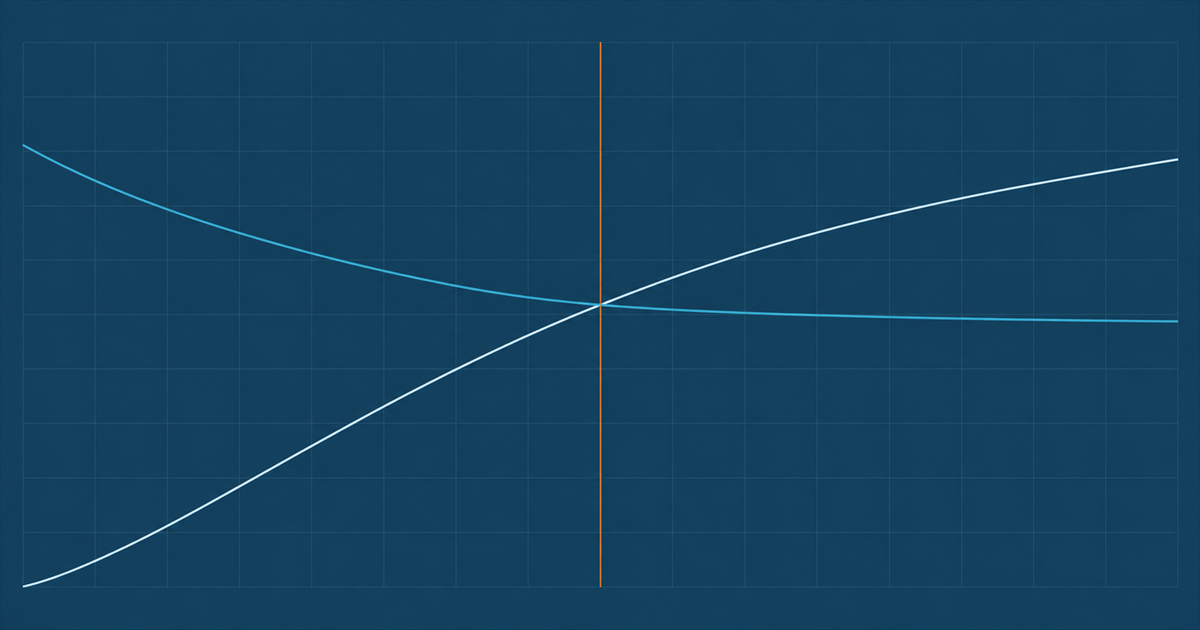
Year one is licence plus implementation plus data preparation, and it is the big number. Year two is licence plus the ongoing content work plus whatever integrations you deferred. Year three is where the total cost of ownership comparison actually gets decided, because by then the implementation cost has amortised and what remains is the running cost of the operating model.
Two patterns are worth expecting.
The cheap licence with expensive integration. Common in the DAM category. The platform is affordable and every connection to it is a project. Total is higher than the quote by a factor that depends entirely on how many systems you have.
The expensive licence with everything included. Common at the enterprise end of PIM. The number is large, visible and survivable, and the risk moves from cost to lock-in, because the included integration work is built in a way only that vendor can maintain.
Neither is a trap exactly. They are different distributions of the same total, and which suits you depends on whether you have engineering capacity or budget, which is rarely both.
The line nobody quotes: getting out
Ask two questions in the first meeting, before the demo.
Can you export everything, including relationships and history, in a documented format, on demand, without a support ticket? The answer determines what you will pay to leave. “We can arrange an export” is not the same answer as “here is the API endpoint”.
Do your assets keep working during a migration? If URLs are tied to the vendor’s domain and the identifiers are internal, then leaving means changing every URL in every channel, which is a cost you incur once and remember forever.
Neither question offends a good vendor. The reaction is itself information.
What should a small team actually budget?
Rough shapes, for a team under fifteen people with a few thousand SKUs. These are planning figures rather than quotes, and the point is the ratio rather than the absolute.
- Do nothing yet. Spreadsheet plus the storefront’s own fields and media library. Cost is the content work, which you are already paying. This is the right answer more often than the category admits, and do you need a PIM yet is the test.
- Media layer only. A delivery and asset platform on a free or low tier, no PIM. Costs tens per month at small scale, removes the crop and format work permanently, and is reversible.
- PIM only. Entry tiers in this category start in the low hundreds per month. Add the same again for implementation in year one, and count on someone spending real time on channel mappings.
- Both, properly implemented. Assume a five-figure year one including implementation, and half of that ongoing. If the quote is materially below that, check which of the five lines has been left out.
The alternatives to spending any of it, including what you can assemble from tools you already pay for, are in alternatives to buying a DAM and a PIM. The boundary question that determines whether you need one system or two is in DAM vs PIM.